Optimization plays a central role in data-driven design. However, choosing an appropriate optimization algorithm for a specific task is often challenging, as it depends on the structure of the optimization problem and practical limitations such as the computational budget. To tackle this challenge, the field has seen a shift from manually designing optimizers toward using machine learning methods that attempt to learn the optimization process itself. Despite significant progress, existing approaches frequently exhibit limited generalization to new distributions and typically require retraining to transfer their knowledge.
We introduce a new approach called "Learning to Choose Optimizers" (L2CO). In our approach, a meta-learner first selects an optimizer before any function evaluations—based solely on available problem characteristics—and then reassesses that choice using a unified model that jointly encodes problem context, optimizer identity, and the observed optimization trajectory. By restricting selection to well-established algorithms, L2CO avoids the convergence issues of learned update rules while retaining the adaptability of dynamic selection.
In this work, we train our model offline on a collection of benchmark functions, employing a mixture of gradient-based, population-based, and probabilistic model-based optimizers. We demonstrate the effectiveness of our method by comparing its performance to classical optimizers on standard benchmark problems and a neural net classification task. The empirical results indicate that L2CO is a promising tool with improved generalization capabilities. 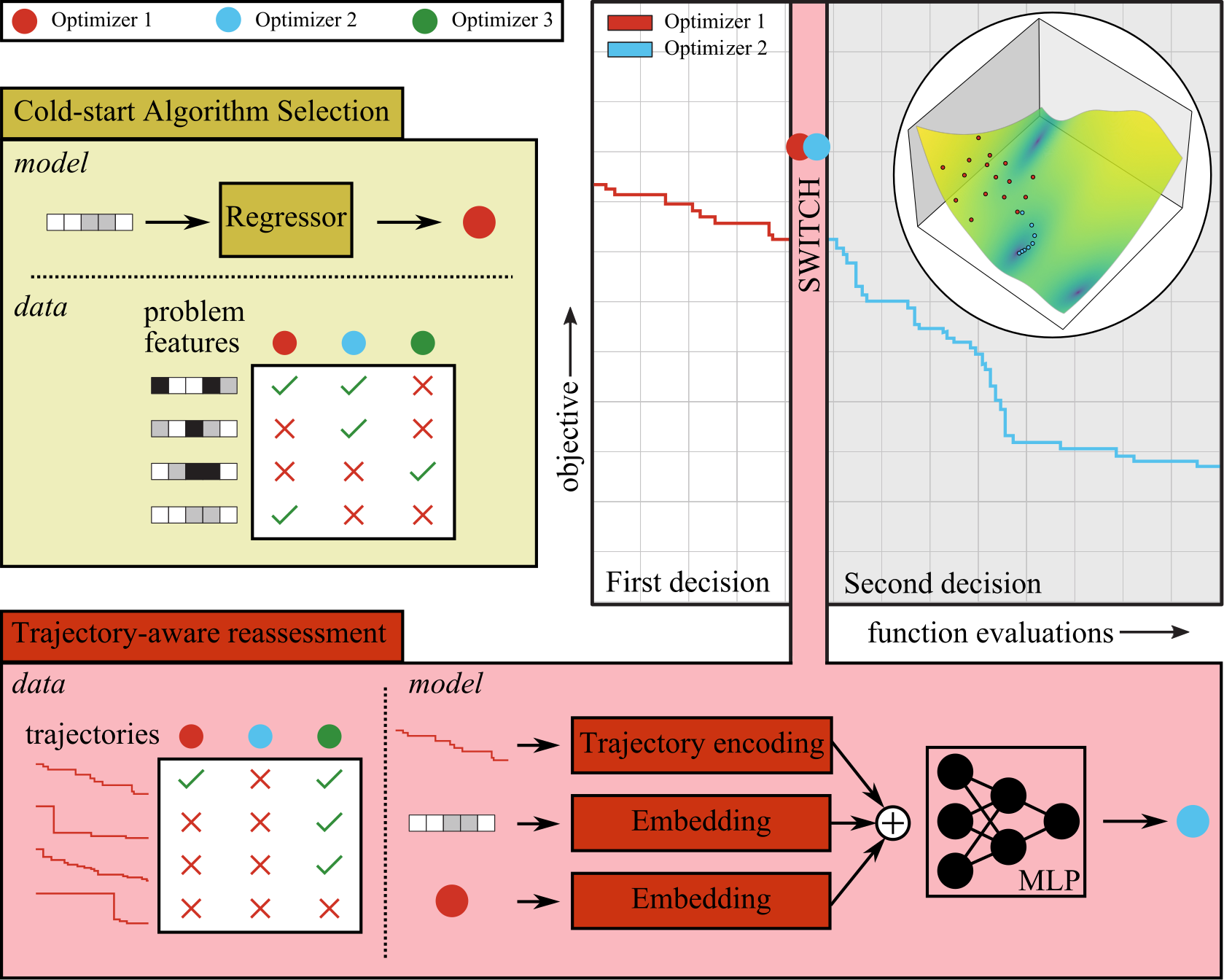
van der Schelling, M., Toshniwal, D., & Bessa, M. A. Learning to Choose Optimizers. IEEE Congress on Evolutionary Computation (CEC), 2026.
Martin van der Schelling
Hi! I'm interested in developing research software for a better world, combining computational modeling and optimization with materials science. With my chemical background, I'm curious about the world of plastics and composites, and I'm ready to take on the challenges that come with the clean energy transition. Besides, I play the piano in a cover band!
Experience
Delft University of Technology
PhD Candidate • Feb, 2022 — Present
Material optimization guided by machine learning.
Recent advances in computational resources have accelerated the development of inverse design approaches for structures and materials. In particular, data-driven strategies that leverage machine learning are increasingly shaping modern design workflows. However, constructing and maintaining large material-response databases remains challenging in practice. Typical challenges include data management, efficient parallel computing, and the integration of third-party simulation or analysis software. Because many applied fields remain conservative in openly sharing data and software, researchers often spend substantial time re-implementing standard procedures, hindering reproducibility, benchmarking, and adherence to FAIR principles.
In this work, we introduce f3dasm (framework for data-driven design & analysis of structures and materials), a general and user-friendly open-source package that supports the full data-driven design pipeline. The framework aims to streamline research workflows, facilitate the replication of existing studies, and encourage the sharing of new experiments and results. f3dasm emphasizes flexibility, interoperability, and modularity. In particular, it enables researchers to integrate different software packages and computational tools across the key stages of a data-driven design loop: (1) design of experiments; (2) data generation; (3) machine learning and surrogate modeling; and (4) optimization.
Since its first public release, f3dasm has been expanded to support MPI-based parallelization in high-performance clusters, enabling efficient large-scale data generation and simulation workloads. Furthermore, f3dasm adopts array-centric data structures that avoid breaking the computational graph when interfacing with automatic differentiation libraries, facilitating gradient-based learning and optimization. By lowering technical barriers and promoting reproducibility, f3dasm contributes to democratizing data-driven design for researchers and practitioners in structural and material engineering. 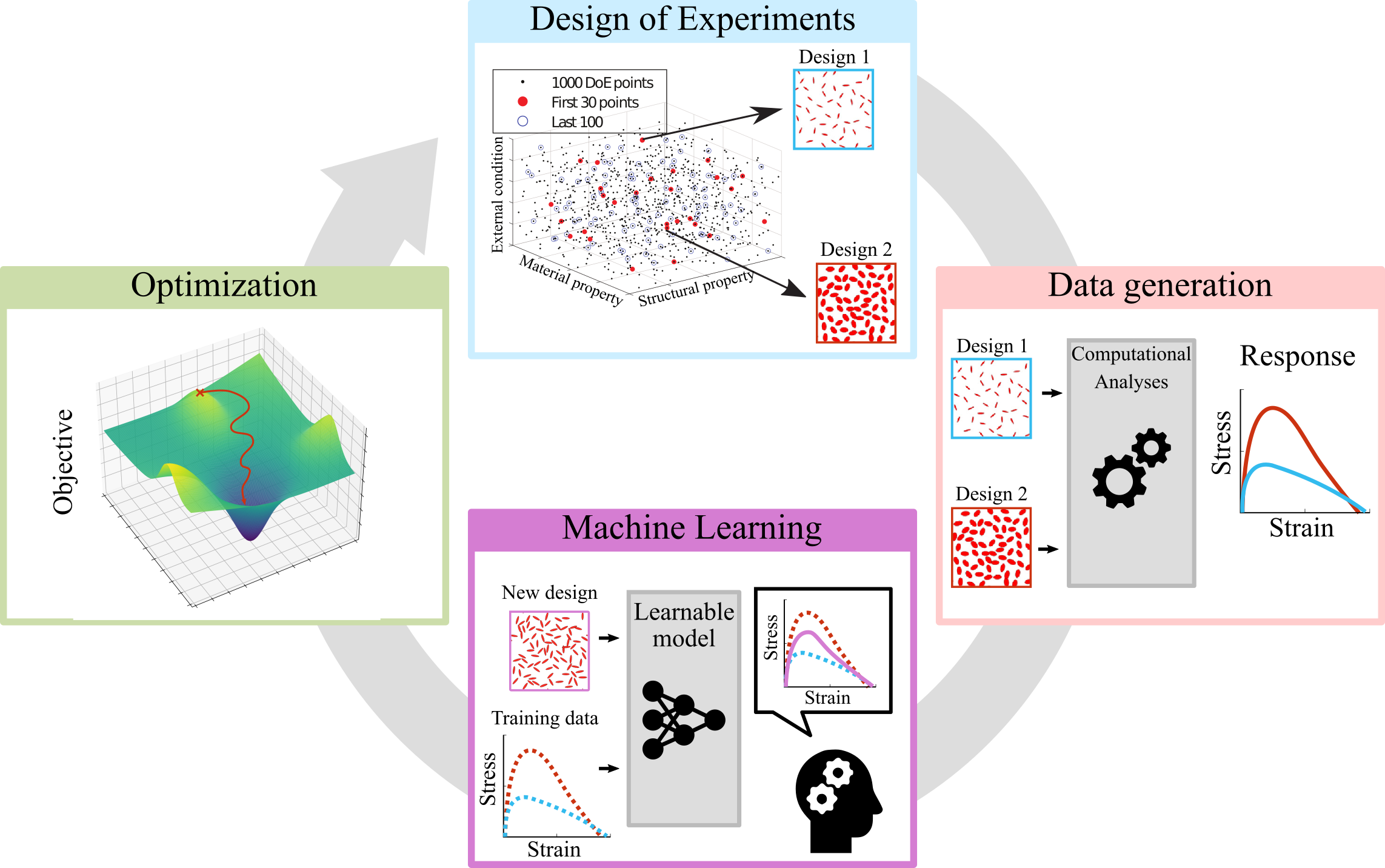
van der Schelling et al., (2024). f3dasm: Framework for Data-Driven Design and Analysis of Structures and Materials. Journal of Open Source Software, 9(100), 6912, https://doi.org/10.21105/joss.06912
Brown University
Visiting Scholar • Sep, 2023 — Feb, 2024
Engaged as a Visiting Scholar at Brown University, I collaborated with leading academics on cutting-edge research, expanding my expertise in computational mechanics and contributing to the university's educational program.
- Contributed to the lectures, assignments and student projects of the 3dasm course.
ALTEN Nederland
Consultant Technology • May, 2021 — Feb, 2022
Scientific software engineer.
The ALTEN Technical Software Masterclass is a 6-week course covering C++ and Object-Oriented Programming. During this Masterclass, an autonomous player is programmed for a client-server framework of the game Bomberman. The focus of the project is on learning good programming practices; knowledge of Git, software design and Scrum is also applied.
The following activities are covered during the masterclass:
- Delivery of a document containing the various design choices and diagrams for Object-Oriented Programming (UML)
- Implementing an AI agent that can make intelligent choices in C++
- Unit testing of the implemented code.
- Presenting the finished project and the developed software.
KROHNE New Technologies
Test engineer • July, 2021 — Dec, 2021
Consultant via ALTEN Nederland.
KROHNE is a world-leading manufacturer and supplier of solutions in industrial process instrumentation. The portable clamp-on project is a detachable flowmeter which is supported with an Android application in order to send and display information from the flow sensor.
I fulfilled the role as a test engineer for the Android application and have conducted the following activities:
- Performing manual integration testing
- Developing automatic test scripts with Xamarin UITest in C#
- Using an in-house test suite application to conduct data verification of the KROHNE flowmeter in JavaScript
- Generating test reports and managing the communication within the development team
- Developing automatic power profiling tests in JavaScript
- Developing data analysis scripts in Python 3
- Maintaining Arduino C++ code for a servo potentiometer
NPSP B.V.
MSc thesis student • Mar, 2020 — Mar, 2021
NPSP B.V. is a research and development company within the field of bio-based composites. New circular materials are being produced by using materials from waste streams.
During this project I developed a Bayesian optimization model to enhance its research. This application uses the mechanical properties of different composite recipes to predict which material ratios need to be adjusted in order to produce better natural composites.
Besides this specific application of algorithmic optimization, I delved deeper into meta-heuristics and meta-learning. Based on the loss-landscape of general optimization problems, I have developed a unique reinforcement-learning system in which the most competent algorithm is chosen for each problem.
For this I carried out the following activities:
- Translated researchers' questions into software requirements
- Carried out a thorough literature review and academic reporting
- Ran simulations on a cluster computer network
- Gave multiple oral presentations; both for the client and the employer
- Supplied concise documentation for the application
Delft University of Technology
Teaching Assistant Computational Materials Science • Feb, 2020 — Apr, 2020
Grading assignments and giving feedback for the master's course 'Computational Materials Science I'.
During the master's program 'Materials Science & Engineering', students are taught material simulation and modeling techniques within the course 'Computational Materials Science'. For this course I held the position of teaching assistant, checking the assignments of 80 students and providing feedback.
My activities within this position were:
- Review the first-year students' code in both MATLAB and Python and give feedback
- Document the worked-out solutions of the weekly assignments by means of Jupyter Notebook
- Document the students' grades
OGD ict-diensten
IT-support • Nov, 2016 — July, 2018
First-line IT-desk co-worker in a team. Setting-up of internal IT-procedures.
- Ampelmann B.V. (May, 2018 — July, 2018)
- Priva B.V. (Nov, 2016 — Apr, 2017)
Education
Delft University of Technology
MSc Materials Science & Engineering • Sept, 2018 — Mar, 2021
- Self-defined specialization — Plastics, sustainability and computational materials sciences
- MSc thesis — A data-driven heuristic decision strategy for data-scarce optimization with an application towards bio-based composites. Graded 9.5/10.
With a background in chemical engineering, I am interested in the world of polymers and soft matter. I took courses in 'Functional Coatings' and 'Self-healing Materials' to become an expert in incorporating chemistry in modern material science. In addition, the minor 'Sustainable Energy and Technology' and the MSc course 'Materials for Clean Energy Technology' have taught me a lot about the world-wide drive of creating renewable energy and products. With my knowledge in chemical material sciences, I would like to be part of the global sustainability trend. Lastly, the course 'Polymer Science' has taught me that unconventional materials such as polymers are complex to model. Because of that, the multiple courses on Computational Materials Science are an essential aspect to my specialization.
Imperial College London
External Research Project • Sept, 2019 — Dec, 2019
- Simulating the charge mobility transfer of the copolymer C16-IDTBT with Kinetic Monte Carlo. Graded 9.0/10.
- Published in PNAS — 'Perpendicular crossing chains enable high mobility in a noncrystalline conjugated polymer' (2024).
To enhance the performance of organic solar cells, it is essential to investigate the microscopic features that affect the charge mobility in semiconducting materials. The co-polymer indacenodithiophene-benzothiadiazole (C16-IDTBT) has shown promising results for high mobility hole transfer. This research attempts to integrate the microscopic dynamics of this co-polymer onto the macroscopic simulation program ToFeT. The Time-of-Flight and field-effect transistor mobility measurement methods and their implementation in the simulation code are described. Subsequently, a network of inter- and intramolecular interactions is built, and the morphology of C16-IDTBT is extracted from a molecular dynamics simulation in Gromacs. The resulting hole mobilities are compared with transient SCLC and FET experimental data from the literature. The time-of-flight mobilities show similar behavior to experimental transient SCLC mobilities.
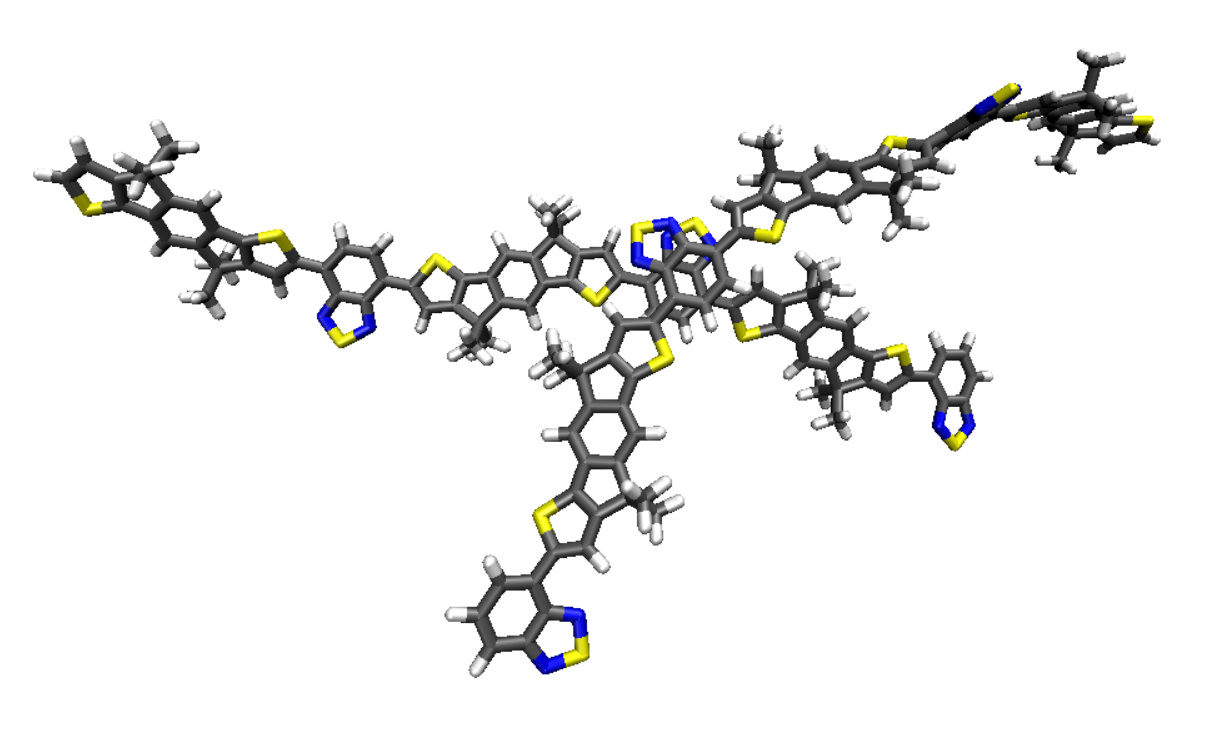
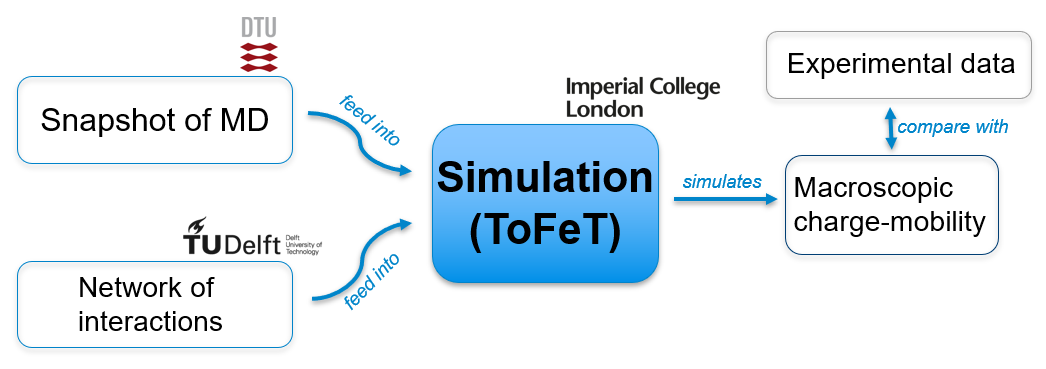
This work contributed to the following peer-reviewed publication:
- J. F. Coker, S. Moro, A. S. Gertsen, X. Shi, D. Pearce, M. P. van der Schelling, Y. Xu, W. Zhang, J. W. Andreasen, C. R. Snyder, L. J. Richter, M. J. Bird, I. McCulloch, G. Costantini, J. M. Frost and J. Nelson, 'Perpendicular crossing chains enable high mobility in a noncrystalline conjugated polymer', Proceedings of the National Academy of Sciences 121(37), e2403879121 (2024).
Delft University of Technology
BSc Molecular Science & Technology • Sept, 2013 — Mar, 2018
- BSc thesis — Study of UiO-66 linkers' rotational dynamics
- Minor — Sustainable Energy & Technology
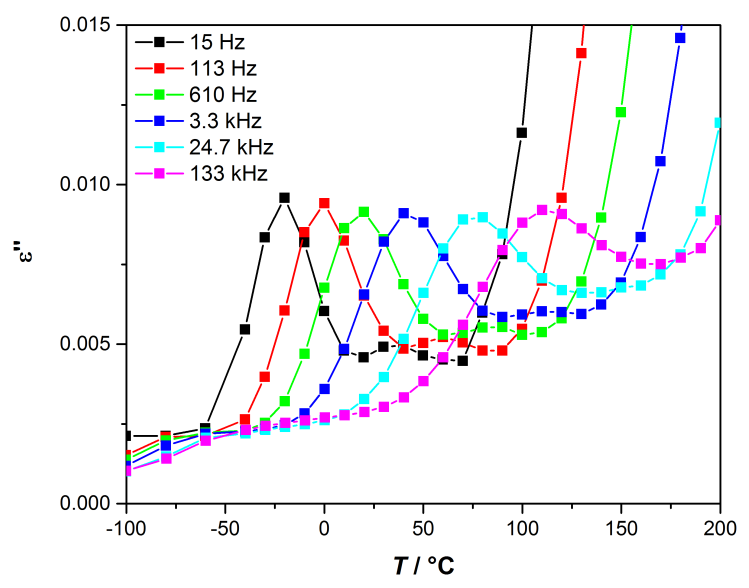
Due to the ever-increasing demand for efficient data storage, innovative ways of storing data on the molecular level are being investigated. To store data on the molecular level, rotating linkers of the UiO-66 metal-organic framework (MOF) are possible candidates. Before we can control this rotation, the rotational dynamics of the 1,4-dicarboxylic linker are being researched. With the characterization techniques PXRD, DRIFTS, TGA and N2-adsorption, it was concluded that the structure and surface area are the same as those of reported materials. With broadband dielectric spectroscopy, the rotational dynamics of the metal-organic frameworks were examined. In addition, we compared UiO-66-NO2 with another MOF with the same BDC linker, MIL-53-NO2, and it showed that the dielectric relaxation is around the same temperature. This suggests that the interaction of the linker and the framework is of equal magnitude. In conclusion, UiO-66-NO2 has a similar interframework interaction to MIL-53-NO2. The large difference between relaxation temperatures for UiO-66-NH2 and UiO-66-NO2 may be explained by the interactions between the cornerstone and the linker which can hinder the rotation.
Associations
V.O.F. De Klittenband
Keyboard player & manager • Feb, 2015 — Present
Student coverband with 30 shows per year. Manager of a small business since September 2018.



Hockeyclub Delfshaven
Competition Secretary • 2021 — 2026
Responsible for planning field hockey matches and appointing referees for the field hockey club HC Delfshaven.
Student Association 'Tubalkain'
Board of Studies member • 2018 — 2019
Safeguards the educational quality of the master's program 'Materials Science & Engineering'.
K.S.V. Sanctus Virgilius
Advisory Board Theatre Production • 2018 — 2021
Responsible for the long-term policies and assisting the current board.
K.S.V. Sanctus Virgilius
Board member Theatre Production • 2015 — 2016
Organizing a student musical for 50 students and professionals in 'Theater de Veste'.
AEGEE-Delft
Secretary Art & Culture committee • 2014 — 2015
Organizing various cultural activities, including the art and music festival 't Collectief.
Skills & Interests
Programming languages
Python, C++, MATLAB
Applications and tools
Git, LaTeX, Anaconda, Visual Studio Code, QtCreator, VideoPad Video Editor
Methods
Scrum, Object-Oriented Programming, Data-Driven Design
Licenses
PADI Open Water Diver, ISTQB Foundation Level
Field hockey
Field hockey enthusiast. I enjoy playing in Delft and Rotterdam, and played in London during my internship.
Playing piano
I enjoy making music with friends and performing with my coverband. Check out this livestream I took part in!
Social Links
- Github: https://github.com/mpvanderschelling
- LinkedIn: https://www.linkedin.com/in/mpvanderschelling/